• An Open Letter to US Congress

Humanitartian Perspectives

  • Engaging critically with “whiteness” in the context of modern social justice advocacy 

    December 21st, 2023

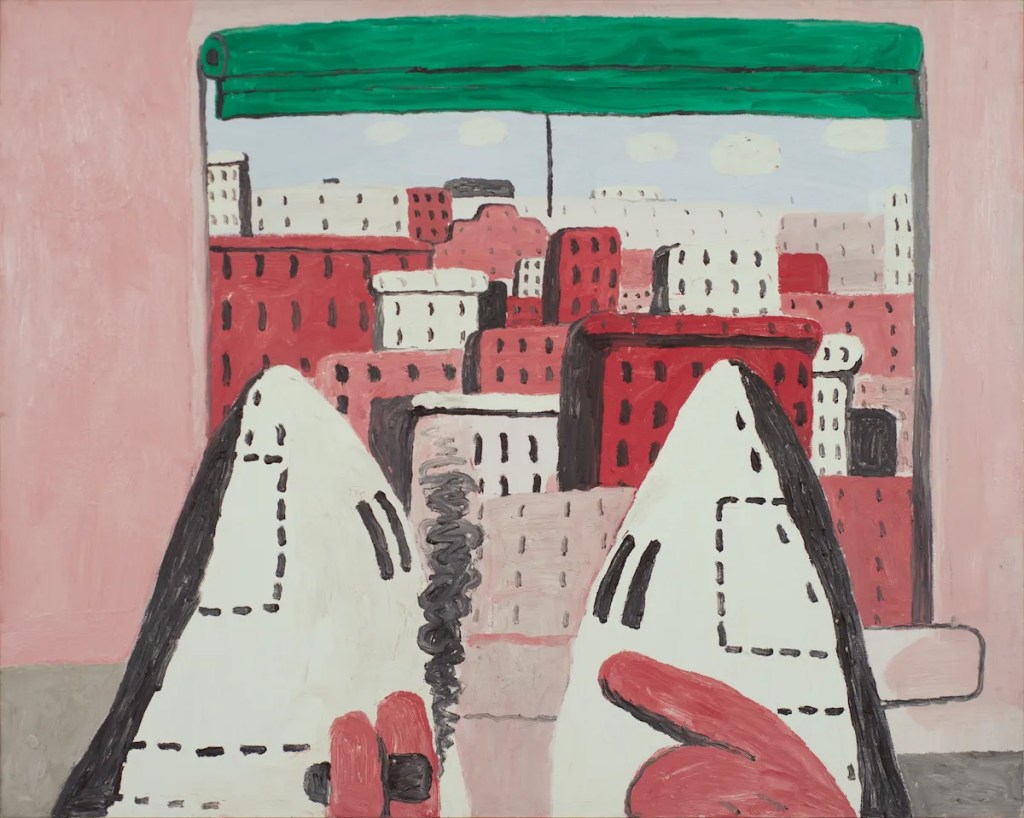
    Philip Guston, Open Window II, 1969.

    I remember being confused as a fourth grader, beginning my state-mandated standardized test and knowing that I was expected to circle the bubble that says “white” under “ethnicity”. I didn’t have the words for it at the time but, at the most basic level, I knew that I was being asked to self-identify as something that I was not. While that may sound inflammatory coming from a person who would clearly be identified as “white” in American society, my hope is that you may be willing to consider a different viewpoint by the end of this essay. 

    My embodied feeling of incongruence was due to my experience that I was being asked to sign onto the program of dividing all the kids in my school up into “white” and “everyone else”. A request for my compliance confronted me in the bubble marked “white”. I didn’t like it. I didn’t like the way it felt for the adults to tell us that some kids were different from other kids, with strange, unclear rules and expectations attached to those differences. I still don’t like the way that I was expected to categorize my lived experience, however I now understand much more about the cultural phenomenon that I was confronted with in that moment.

    While we are told to think of “white” as an ethnicity, it is not. It is not the heritage of the collective wisdom of one’s ancestors, nor is it the land that they came from. Rather, it is the defining side of a dualistic power structure that inflicts perpetual violence upon people. This is the dualism of “white” and “not-white” in American society, both historically and today. There’s no shortage of words that have been used to diminish and demean the humans placed into the “non-white” category across the span of centuries of racist violence. 

    If one desires to respond to this situation compassionately, it’s crucial to understand what “white” means in American culture, and how one’s appearance interacts with a shared story that privileges “whiteness”. It’s also essential to consider the ways that this shows up in the minutes of one’s life, and to be curious about the ways that this shows up in other people’s lives.

    However, to self-identify as “white” in America, keeps the process stuck within a dualistic self-understanding that is unavoidably violent. Self-identifying as “white” is to identify with the structure itself, a structure that is fundamentally about making people “other”. It’s about alienation and distance. To identify with this story is only helpful as a way of recognizing one’s direct experience in a process of unfolding broader human connection and acceptance.  

    This doesn’t mean that we can’t communicate about “whiteness” specifically and concretely. Someone can choose to not self-identify as “white” while still recognizing that they are treated as “white” within a system that imposes “whiteness” on all its subjects. 

    What the current popular social justice advocacy narrative often misses is that the imposition of “whiteness” is inflicted upon each and every person in American society. This violence is traumatic to all, no matter which side of the power dichotomy they are sorted into. With consideration that this essay is in dialogue with informed perspectives on the way that this violence occurs for those who are labeled as “non-white”, I want to cover how it looks for people placed on the side labeled as “white”. I believe that significant parts of this trauma remain concealed in progressive American culture and that, as a consequence, the communal process of social healing is frequently interrupted.

    To be told that one is “white” is to be specifically told that your life is more valuable and worthy of compassion than the lives of other humans. This is a lie so entirely mischaracterizing of the nature of human existence that it inflicts a trauma upon each person that it is imposed upon. This is the meaning of “white” in the context of American culture and it is also at the core of the thinking that allows for racism. Someone can be told the story that they are “white” for their entire life, yet it will make the story no less a lie about the fundamental nature of who they actually are. It will always be a lie. Identifying with that lie will keep a person stuck. 

    Consider two different responses to the question: How has the dualistic racist social framework of American culture affected you?

    1. All my life, I’ve been treated as “white”. This meant that I was told that I was better and more important than other people, as a fundamental characteristic of who I am. I know that story was a lie and I’m familiar with, and relate compassionately to, how it wounded me. I wish to relate to each person who has been traumatized by this same system with curiosity and compassion.
    2. All my life, I’ve been white. I identify as a white person. It’s an injustice that white people have perpetuated violent structural racism against Black people for centuries. It’s my responsibility, and the responsibility of all white people, to make it right. My experience is fundamentally different from the experience of Black people because I identify with the privileged side of historical racism. This is the way to make progress. Additionally, I feel a great deal of guilt and shame about the history of racism in America. It’s important that I don’t make the shame about me. To focus on my experience of shame directly and to seek out lots of direct support for it would be privileged and self-indulgent of me. Instead, I hold my unhealed shame as a badge of honor and use it to motivate myself to work harder towards helping people who I see as less privileged than myself. White people who don’t think about it this way need to check their privilege and their internalized racism because they are being racist. I know this for a fact.

    One could argue that the voice at the end of the second answer is a bit “too self-aware”, and I’d agree. What I’m attempting to illustrate is a misunderstanding, caused by the racist framework itself, that interrupts someone’s ability to contact their lived experience directly enough to allow it to change and transform, to continue forward in an unfolding process of increased awareness.  

    Notice also that while the person in the second response is able to indicate awareness that their experience is radically different from the people whom they consider to be “Black”, this dialogical approach is only applied selectively. This person doesn’t think of themselves as fundamentally different from people they would consider to be “white”, with the same level of imagined space for difference. One indication of this is to impose any kind of universal external responsibility on a perceived homogeneous group of people (i.e. “its the responsibility of all white people to repent and make things right”). This is not dialogical. 

    This person might plan meetings with only other “white” people where they talk at length about how to best help marginalized people to “fix” racism. In doing so, the person would continue to strongly identify as “white” and to further distance their own experience from that of people who they would perceive as “not white”. This person might explain their actions with a misunderstanding of the truth: “one can never know someone else’s experience.” Armed with that truth, this person might feel virtuous to be working in service of such a noble ideal. 

    However, they may also be unaware that their choice to regard only certain people’s experiences as radically different from their own demonstrates a fundamental lack understanding of the principles of basic dialogue. When this is the case, the entire attempt at dialogue becomes corrupted because it is built upon unstable foundations. More often than not, the person who self-identifies as “white” will approach people of racial minority groups not with dialogic curiosity but rather with a tangled collection of projections that have to do with the person’s own externalized, disowned shame. 

    Broader healing can happen when we recognize that this variety of disoriented, externalized shame is another form that the trauma of racism in America can take in a person, especially for people who are labeled as “white”. This trauma, like all trauma, is a cutting off from the self. It happens to each person in American society around the construct of “whiteness”. It can be healed with love, curiosity, and awareness, through dialogue. 

    Based upon these realities, I’d like to suggest a radical change in perspective that may be offensive to some who are involved in the genuine mission of social justice advocacy. When looking directly at the dualism that is the essential structure of American racism, an important and unavoidable truth is uncovered: only someone thinking within the framework of American racism, which is, by definition, the opposite of critical engagement, can believe that “white” people have a role in healing the trauma that this framework inflicts. 

    The distinction between a self-identified “white person” and someone who can simply acknowledge that they are treated as “white”, including the direct trauma that comes along with being taught to see one’s self and act towards others as a “white person”, may sound minor. It is actually the difference between two entirely different fields of possibility. The first necessarily retains the scaffolding of a racist dualistic power structure, while the second allows for the possibility of a much broader viewpoint. This provides the needed space for greater contact with one’s own direct experience as a place for gaining insight through critical engagement.

    Healing the collective trauma of racism in America inescapably requires departing from the social construct that this racism built, as the primary means of understanding and describing one’s self in relation to others. We do this by communally building the context to talk about racism with greater embodied precision, from the vantage point of the something new that is co-created. Each person who is willing to extend radical compassion and curiosity towards vast landscape of human suffering that is racism in America, is a participant in this co-creation. Whatever this new, emerging language of compassion and shared understanding looks like, it will always be best represented by those who remain dedicated to the existentially respectful fundamentals of honest dialogue. 

  • American Zionism Isn’t About Jewish People

    November 9th, 2023

    Humanitarian protestors shown behind United States Secretary of State, Antony Blinken as he provides testimony to congress in an appeal to send billions of dollars to Israel in US military support. The testimony occurred while the Israeli government continues to engage in genocide towards the Palestinian population in Gaza.

    Nov 1st 2023

    American Zionism, as a social phenomenon, is wholly unconcerned with the safety of Jews.

    One could be forgiven for thinking otherwise. On the surface, such impassioned appeals for a Jewish homeland in the Middle East would reasonably appear to be about the safety of Jewish people. However, in American culture, these appeals are almost always the product of a cynical attempt by people with power to wield the concept as a crude, but rhetorically effective, means of labeling those they disagree with as “antisemitic”.

    In this way Zionism has become a highly-euphemized form of many different, and often conflicting, political agendas that are unrelated to combating antisemitism or the well-being of Jewish people. 

    In the modern era, Zionism is an idea so singularly righteous, so inextricably tied to the pivotal global trauma of the Holocaust, as to be a uniquely effective political bludgeon for nearly any purpose or ideology. This is how, for example, we can see openly antisemitic, white-nationalist groups also passionately advocating for a sovereign Jewish state. Even an ideology like white supremacy, which is seemingly incompatible with an international directive to protect Jews from persecution (millions of Jews are not white), is able to leverage Zionism to great effect.

    Conveniently for those doing the rhetorical bludgeoning and/or virtue signaling, Zionism, also fits nicely into a powerful pre-existing cultural template, based on centuries of colonialism, that Americans and their politicians are unconsciously primed to support. Americans have a long history of diminishing the humanity of Arab peoples and a much longer, and no less bloody, history of diminishing the humanity of the native people who lived in present day America prior to colonization. Israel, as a direct product of the same lineage of western colonialism, fits nicely into the preexisting hegemonic framework that preferences the experiences of the settler over the displaced.

    For these reasons, Zionism would appear to run American politics at every level. To the cynical, it predictably rouses righteous indignation from the masses to the benefit of the person wielding it. While Zionist arguments claim to be in favor of a Jewish ethnostate on the surface (a problematic, though widely supported, concept in its own right), these “arguments” also have the remarkable ability to remain nearly entirely ideologically meaningless. This makes Zionist arguments both highly effective in rousing support and/or condemnation, while remaining very low-risk politically. Notably, these exact characteristics also make these pro-Zionist arguments highly destructive to the process of responsible governance and national discourse.

    Zionism in American culture, in broadest sense, is neither a coherent ideology nor is it an organized movement. It is, however, a remarkably effective multi-purpose rhetorical tool. For this reason, Zionism has remained popular in American political discourse for decades. In American politics, it is both everything and nothing.

    Mostly though, Zionism, as it exists in American culture today, is a deadly testament to society’s willingness to allow itself to uncritically consume the cheap, unrefined righteous indignation that is dolled out by various powerful parties as rhetorical leverage in the pursuit of other political goals, goals that are either opaque by design or, perhaps, simply less socially compelling. 

    Importantly, the political agendas that are frequently hitched to pro-Zionist arguments are almost always unrelated to the well-being of Jewish people. In fact, these goals are sometimes directly at odds with the well-being of Jews. Such a case is on display now as the world watches Israel’s genocide of Palestinian civilians play out on global stage, in horrific fashion. 

    Many, perhaps the majority, of global witnesses already know the obvious: Israel’s choice to slaughter Palestinian people as collective punishment, a truly barbaric war crime, will not make Jewish people safer. 

    To the contrary, Israel has placed a target on all Jewish people by pushing propaganda that attributes Israeli slaughter of ordinary Palestinian people (violence that 800 top international experts and historians on the Holocaust, international law, and genocide, have identified, in a signed open letter, as having all the key characteristics of genocide) to the wishes of all Jews.

    Like most American politicians, the Israeli government is engaged in its own attempt to leverage the existence of antisemitism, through pro-Zionist arguments, towards ends unrelated to the well-being of Jewish people. Horrific as it is, it also makes sense that most American politicians were already primed to voice support for Israel as it engages in heinous, brutal war crimes: both the Israeli government and American politicians regularly and frequently pay homage to the same destructive rhetorical tool. These parties wield the rhetorical tool of Zionism in an effort to cynically leverage the trauma of the Holocaust towards their own ends. 

    Unfortunately, due to profound inter-generational trauma, as a product of the Holocaust, dishonest Zionist arguments remain effective with some American Jews despite this obvious incongruence. To see Jewish people passionately supporting the Israeli genocide of Palestinians is both heartbreaking and understandable. It is the tragic story of an unhealed inter-generational trauma cycle: some of the people who are most affected by the Holocaust, in their human desire to feel safe from the worst forms of ethnic persecution, are now among the most openly genocidal voices in the world. Or, put another way, both American politicians and the government of Israel are disingenuously leveraging the inter-generational trauma of Jewish people against them, to use for their own means. 

    It is through this lens that we can begin to understand the tragic madness on display in the world now, as well as the complicity of the United States in that tragedy, despite having near-unilateral power to change the outcome. In a world already saturated with antisemitism, Israel engages in unrestrained, genocidal killing of Palestinians in the name of all Jewish people. With the enthusiastic support of most elected officials in the United States, Israel makes Jews around the world a target for violence as well as understandable, though misplaced, anger at the war atrocities it is committing every day. This should be unacceptable to anyone who values the safety of Jewish people, Jewish communities, and Palestinians alike. 

  • Visualizing the Scale of Human Suffering, Digital Art

    December 9th, 2023

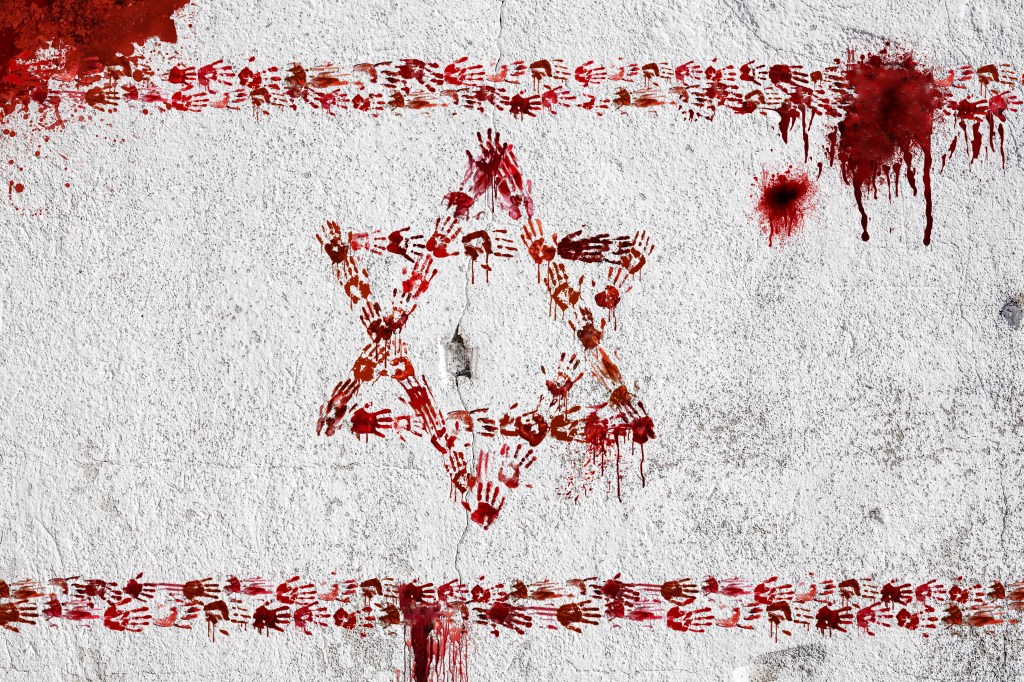
    This piece attempts to express profound sadness and pain, as a witness of current events. This is my attempt to visualize the scale, and complex, trauma-laden nature of human suffering taking place as well as the grotesque disregard for all humans living in Gaza, as well the rest of Israel and the world more broadly, by the Israeli government.

  • An Open Letter to US Congress

    November 9th, 2023

    Call your congress person and ask them to demand a CEASE FIRE now and to stand against the Isaeli genocide of Palestinian people. You can do this by dialing the congressional switchboard at (202)224-3121 and asking for your representative by name.

    I call on congress to stand up to the Israeli genocide of Palestinian people. Half of all voting-age Americans are against sending weapons to Israel. Furthermore, the American public broadly is against the Israeli genocide of Palestinians. Over half of Democrats report that they are more supportive of the Palestinian people than of the far-right Israeli government that is currently, definitionally engaged in genocide. [Most importantly, genocide is wrong and the times has moral obligation to say so and to name Israel as the party enacting genocide.]

    The United States congress bears a unique moral responsibility in this situation. Only through the forceful endorsement of Israel by the United States on the international stage is it possible for Israel to act with such impunity. Palestinians were violently forced from their homeland and forced to relocate, as refugees, in Gaza. For decades, the Israeli government has, against international law, held these Palestinians hostage in an open-air prison camp, denied basic human rights like clean water, as they are brutally oppressed by their colonizers. Most historians and regional experts agree that Palestinian people are living in subjugation under the Israeli apartheid state.

    Over the last many decades, Israel has committed numerous well-documented war crimes, including bombing of hospital and the killing of American journalist Shireen Abu Akleh. These war crimes and violations of international law have continued to be possible only because of the powerful enabling of the United States government. Its wrong and the majority of Americans see this and are becoming more and more outraged.

    Through military power and international political weight, the United States has aggressively ensured a morally irresponsible level of immunity and accountability for Israel on the issue of human rights. US foreign policy towards Israel over the last half century has played a defining role in creating the conditions of genocide that the world is witnessing now. Congress bears responsibility. When a genocide is happening is not the time for leaders to take a back seat. To do demonstrates weak and ineffective leadership. It is also morally reprehensible in the eyes of the majority of American citizens who cares about basic human rights.

    Congress has a moral responsibility, and imperative, to act and speak decisively against the Israeli genocide of Palestinian people. Additionally, congress has a moral imperative to demonstrate the courage to speak to the world about the situation with honesty. A majority of historians and experts on the region agree that the current actions of the Israeli government are a genocide of Palestinian people, by definition. This assessment is also consistent with most historical definitions of genocide.

    The United States, by merit of its position on the global geopolitical stage, has up to this point, chosen diplomatic, political, and military actions that further enable and embolden the genocidal actions of the Israeli government. Supporting this genocide in the middle east is a direct dereliction of duty of any elected official because it directly harms the national security of the United States.

    Civilians in the middle east, as well as governments of majority muslim countries are understandably alarmed and outraged at American support for genocide. This fundamentally undermines US diplomatic efforts in the region that are vital to national security. The actions of congress also make Americans a target of the anger of many people in the middle east. As a consequence of this, extremist jihadist groups in the region are likely to consider American citizens a target. By supporting genocide in the middle east, congress puts the safety of every American citizen at risk. Congress has a constitutional obligation to not take actions the needlessly put the lives of American in jeopardy.

    We, the majority coalition of Americans, stand in solidarity with American Jews and Jewish Voice for Peace, in condemning the genocidal actions of the Israeli government as well as the response of the United States.

Blog at WordPress.com.


Loading Comments...
 

    • Subscribe Subscribed
      • Humanitartian Perspectives
      • Already have a WordPress.com account? Log in now.
      • Humanitartian Perspectives
      • Subscribe Subscribed
      • Sign up
      • Log in
      • Report this content
      • View site in Reader
      • Manage subscriptions
      • Collapse this bar